Disposable aprons for factories: how to choose thickness, length, and packaging type
Disposable aprons for factories: how to choose material, length, and packaging type by work environment, number of users, and inventory management. A practical guide for procurement managers and factories.
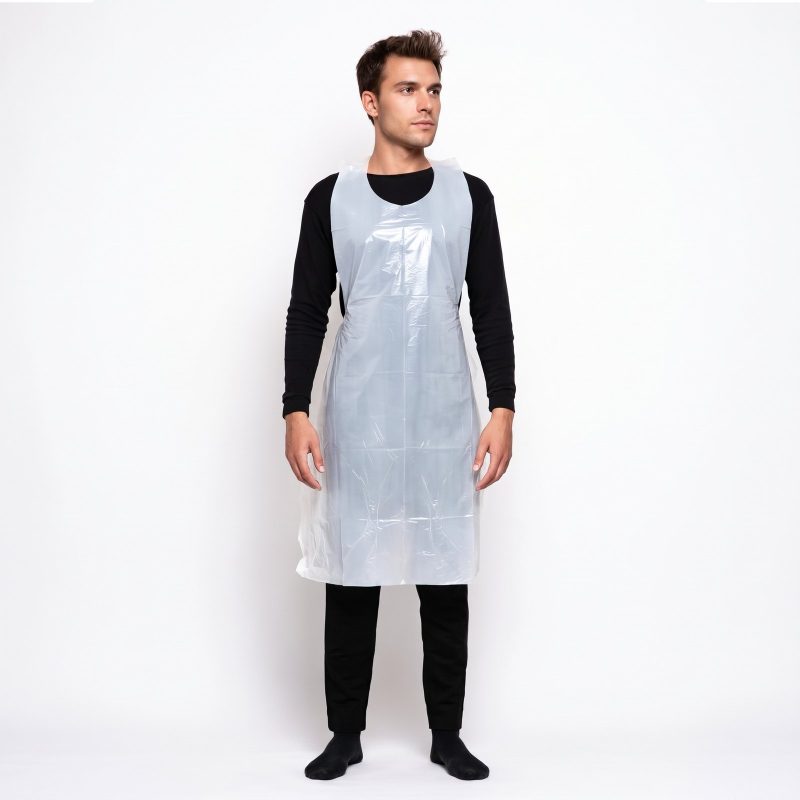
 Image for illustration only · Generated by AI
In brief
Choosing disposable aprons for factories starts with aligning the work environment, material, and sizing. Disposable polyethylene suits dry lines or brief liquid contact, while PVC and polyurethane provide a more durable shell. Dispenser packaging streamlines hygienic pulling at high-traffic stations, and standard packs suit storeroom replenishment.
- Match material to the environment: polyethylene for dry lines, PVC or polyurethane for exposure to liquids and splashes.
- Select size by worker height and process: 110, 120, or 135 cm significantly changes coverage.
- Dispenser packaging can reduce hand contact and speed retrieval at production stations.
- Plan consumption by shifts and headcount, and translate to packs of 100, 5, or single unit.
- Check compatibility with complementary protection items (sleeves, boot covers) to improve overall coverage.
What determines the choice of disposable aprons for factories?
The three practical parameters are work environment, apron dimensions, and packaging type. Getting the combination right prevents on-floor issues and creates consistency across departments.
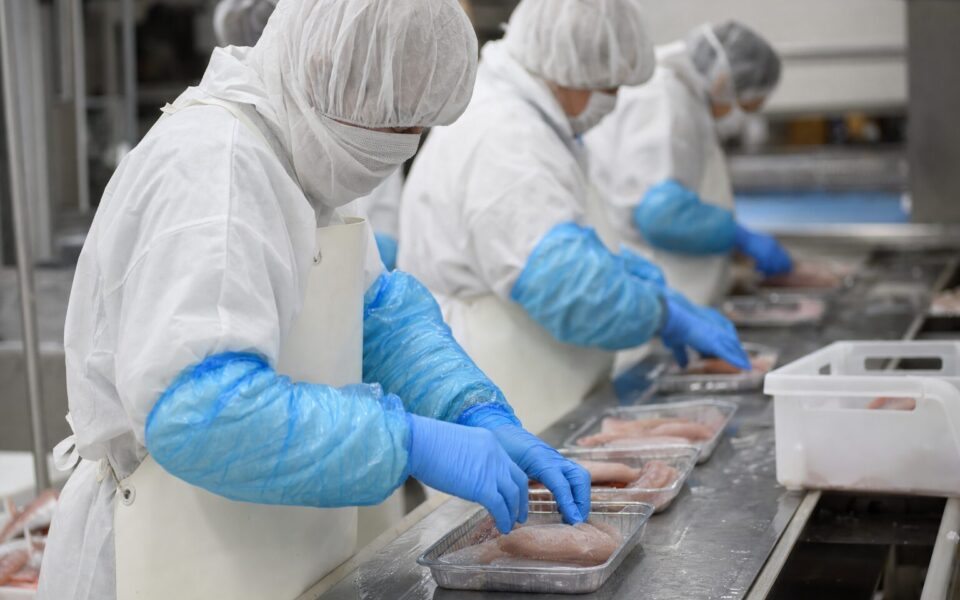
When choosing aprons for a food plant or large butcher shop, start by characterizing the environment: dry vs. wet, splash level, task duration, and whether there is movement between stations. In dry layouts or with spot contact with liquids, disposable polyethylene aprons provide an efficient answer. On wetter lines or in prep involving splashes, PVC or polyurethane aprons in wider cuts have an advantage.
The dimensions (length and width) determine actual coverage—down to the knee or below—and how well the sides stay clean when tilting or lifting. The length offered in the catalog ranges from 110 cm to 135 cm, and the width from 70 cm to 90 cm, allowing you to mix by department or by average team height.
Packaging type affects hygiene and pull speed. At high-traffic stations, dispenser packs are usually preferable; for storeroom replenishment and shift-based distribution, standard 100-unit packs are easy to manage. Choose based on work habits and station layout.
Which material is preferable: polyethylene, PVC, or polyurethane?
Disposable polyethylene suits light to medium-duty work, while PVC and polyurethane provide a more durable shell for wet or splash-heavy environments. Choose by liquid exposure and task profile.
The disposable polyethylene apron category offers several configurations: different sizes and regular or dispenser packaging. For example, a 110×70 disposable apron is suitable for basic coverage on relatively dry packing lines. When hygienic continuous pulling or a thicker material is required, you can choose a thick disposable apron in a dispenser pack, size 120×70 cm.
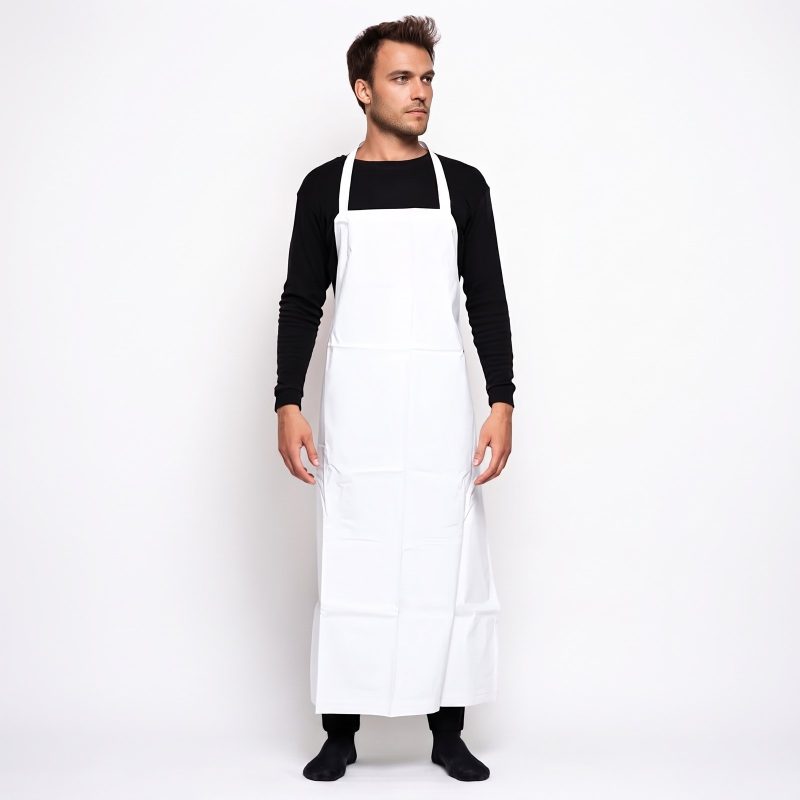
At wetter workstations or for tasks involving splashes, PVC aprons offer different durability and a slightly wider fit at the waist. For instance, the white PVC apron comes in 120×75 cm, in a pack of 5 units, and suits stations where allocating several units per shift is convenient.
When especially wide coverage is needed at the thighs and knees, polyurethane aprons in 120×90 cm provide broader lateral protection. These models are available as single units in blue or white, which is operationally helpful in departments that differentiate by color.
Link to the relevant category
A wider range of aprons and complementary protection items can be found under disposable clothing, where you can assemble a matching set of coats, sleeves, and boot covers for each department alongside the aprons.
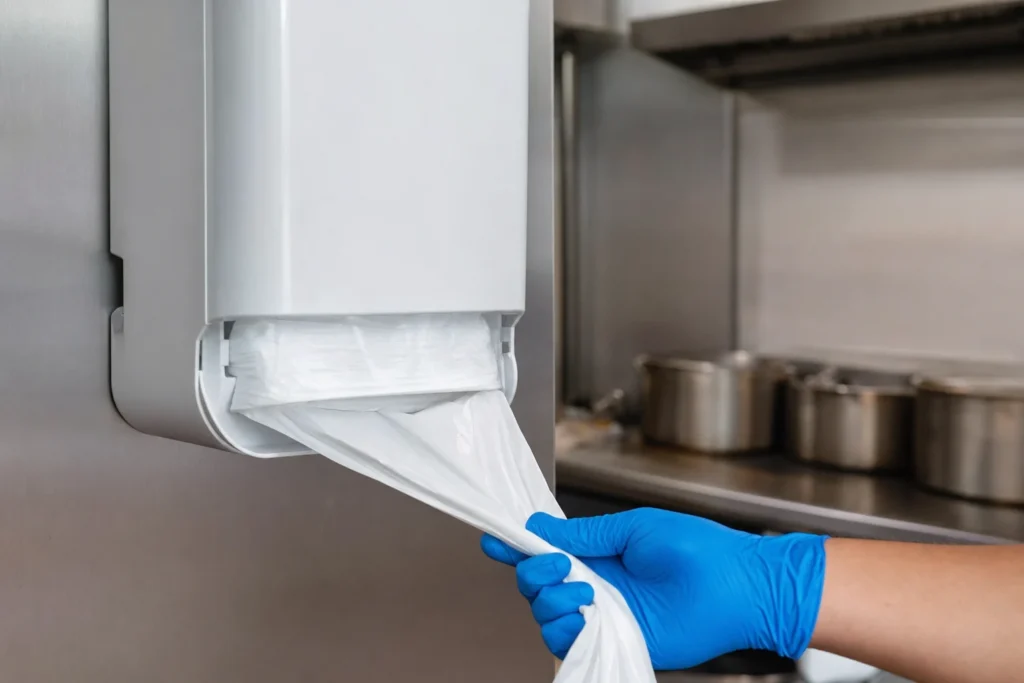 Image for illustration only · Generated by AI
How to choose length and width for disposable factory aprons?
Match dimensions to the team’s average height and process movements: 110, 120, or 135 cm change actual coverage, and widths of 70, 75, or 90 cm affect side protection.
Choosing the right size prevents unnecessary splashes on workwear and reduces mid-task replacements. A 110 cm length suits standing at a waist-height workbench with brief forward lean. A 120 cm length adds some coverage below the knee and suits those who stand for long periods or bend frequently. A 135 cm length provides greater protection for crouching and working with low carts.
Alongside length, width matters when the worker leans left or right or works beside a high surface. A 70 cm width is standard and sufficient for a straight work line. A 75 cm width adds a bit more room at the waist. A 90 cm width provides broader lateral space for gripping and tilting wide products.
Catalog examples: 110×70 cm (polyethylene), 120×70 cm in regular or thick dispenser versions (polyethylene), 120×75 cm (PVC), 120×90 cm (polyurethane), and 135×70 cm as a longer polyethylene model. Align by department based on team average height and station characteristics.
Which packaging is preferable: pack or dispenser?
The main difference is in pull method and hygiene discipline: dispensers suit high-traffic stations with rapid turnover, and packs are convenient for centralized stock and distribution.
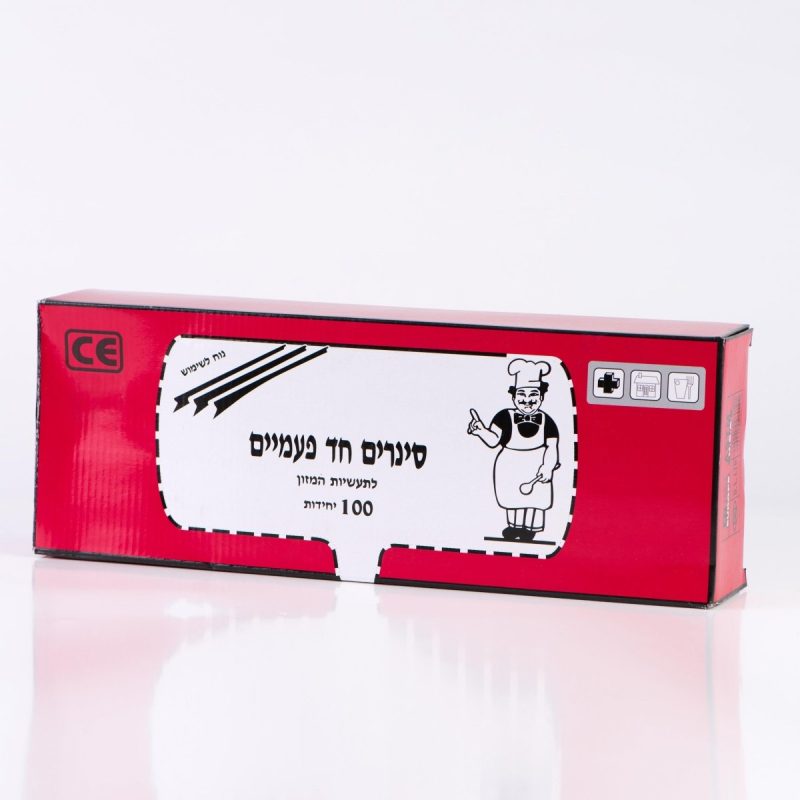
A station-mounted dispenser allows pulling a single unit at a time, reduces relative hand contact, and can help cut waste when workers replace aprons frequently. In the catalog you’ll find both a regular dispenser model (120×70 cm) and a thick model in the same size.
Packs of 100 units suit the central storeroom and distribution points between departments. They’re convenient for quick counting and monthly usage control, and easy to allocate per shift. PVC aprons in 5-unit packs, or polyurethane in single units, make accurate allocation to specific workers or fixed stations easier.
When planning deployment across multiple stations, combining dispensers at high-consumption points with packs for the central storeroom offers a good balance of hygiene and inventory control.
Comparison of selected models – size, material, and packaging
The table compiles key catalog apron models by material, size, and packaging type to help with quick fit to the production line.
The table focuses on representative models in different sizes and packaging. Choose according to work environment, required length and width, and on-floor distribution method.
| Item | Material | Size (cm) | Color | Packaging type | Units per pack |
|---|---|---|---|---|---|
| Disposable apron (SKU 100) | Polyethylene | 110×70 | White | Pack | 100 |
| Long disposable apron (SKU 104) | Polyethylene | 135×70 | White | Pack | 100 |
| Disposable apron, dispenser (SKU 101) | Polyethylene | 120×70 | White | Dispenser | 100 |
| Thick disposable apron, dispenser (SKU 103) | Polyethylene | 120×70 | White | Dispenser | 100 |
| White P.V.C apron (SKU 116) | P.V.C | 120×75 | White | Pack | 5 |
| White polyurethane apron (SKU 118) | Polyurethane | 120×90 | White | Unit | 1 |
How to plan consumption and ordering by shifts?
Set an apron-per-worker-per-shift quantity, multiply by the number of workers, shifts, and days, and translate to packs or dispensers based on actual packaging.
Good planning starts with defining a usage policy for each department: how many aprons per worker per shift, and whether there’s an allowance for mid-task replacements. Then translate monthly consumption into actual packaging based on catalog pack sizes (100, 5, or single unit).
Illustrative example only: a department with 18 workers per shift, two shifts per day, 22 working days per month, and one apron per worker per shift. The calculation: 18 workers × 2 shifts/day = 36 aprons/day. 36 × 22 workdays = 792 aprons/month. If choosing polyethylene aprons in packs of 100 units, 8 packs are required (7 packs × 100 = 700, which is below consumption; 8 packs × 100 = 800, covering the need).
When models are mixed (e.g., a dispenser at a main station and packs for the storeroom), split the calculation between stations by estimated usage percentages, and tune monthly based on actual counts.
Which complementary add-ons should be considered alongside aprons?
For effective coverage on wet or high-contact lines, combine disposable sleeves, boot covers, or light coats by task and department.
Where forearms are exposed, disposable sleeves in white or blue (100 units per pack) help protect the forearm area. At stations with wet floors, polyethylene boot covers (100 units) provide convenient shoe coverage. In departments requiring broader body coverage, you can add nonwoven coats or disposable polyethylene gowns in various sizes.
The right combination lets each department define a fixed set by shift and process, with color differentiation where appropriate to improve quick on-floor identification.
Who is the manufacturer and supplier – and what matters in working together?
Dogans Ltd., owner of the TITANIC brand, imports and supplies disposable clothing and protection for businesses, alongside additional packaging products, so purchasing can be consolidated with a single supplier.
Alongside the range of aprons, the catalog includes complementary protection items, making it easy to build a basket for production, cleaning, and packing departments from one source. For industrial procurement, supplier consolidation helps with spec control, color implementation by zones, and unified inventory management across sites.
Short checklist for choosing aprons for a factory
- Map the work environment: dry, wet, splashes, liquid contact duration.
- Choose material: polyethylene or thick polyethylene, PVC, or polyurethane as needed.
- Fit size: 110, 120, or 135 cm length and 70, 75, or 90 cm width by team and process.
- Set station packaging type: dispenser or pack, aligned to pull method and hygiene.
- Differentiate colors where relevant between departments or tasks.
- Calculate monthly consumption by workers × shifts × days.
- Set safety stock based on production variability (conservative percentage).
- Check combination with sleeves, boot covers, and coats.
- Align with quality procedures, manufacturer instructions, and relevant regulations.
Frequently asked questions
How much does apron length really matter?
Length determines where coverage ends when bending or working with low carts. 110 cm suits standing at a bench with a light lean, 120 cm adds coverage below the knee, and 135 cm is especially helpful for those who bend or carry low trays.
When is it right to choose dispenser packaging?
At stations where aprons are replaced frequently, a dispenser makes it easy to pull a single clean unit and helps reduce waste. For a central storeroom or centralized shift-based distribution, standard 100-unit packs allow quick inventory control.
How to choose between polyethylene, PVC, and polyurethane?
For dry environments or brief liquid contact, disposable polyethylene will generally suffice. With ongoing wetness or splashes, PVC and polyurethane provide different protection and come in wider sizes. Decide based on the production process and station layout.
How to manage inventory across multiple sites or departments?
Define a fixed SKU for each department and size, set a reorder point based on monthly consumption, and hold a conservative percentage of safety stock. Another consideration is color differentiation where appropriate to enable quick on-floor identification.
Interested in building an apron spec and protection basket by department and process? Start with a review of suitable sizes and materials, and combine different packaging types for production stations and the storeroom. For orders and a tailored spec, send a request a quote.