Wholesale Disposable Aprons: How to Choose a Supplier for Recurring Orders?
Wholesale disposable aprons: how to compare quality, units per carton, consumption calculation, and logistics to plan stable purchasing for recurring orders.
 Image for illustration only · Generated by AI
In brief
You buy wholesale disposable aprons right by comparing materials and constructions, confirming exact quantities per pack and per carton, calculating monthly consumption by shifts, and aligning on-site logistics. Separating lines with high turnover from lines with wet load will guide you to the right material. Test real samples, set a unified organizational standard for sizes and colors, and build fixed ordering cadences. This yields a stable cost–service picture that can cut shortages and reduce excess stock.
- Material and construction matter: nylon for frequent replacement; P.V.C or polyurethane for wet load and repeated rinsing.
- Consumption starts with employees x shifts x production days x aprons per employee, then convert to packs and cartons.
- Requesting the “units per carton” figure from the supplier is essential for warehouse planning and reducing excess openings.
- Proper logistics include dispensers at workpoints, color-coding by department, and standardized SKUs.
- Supplier comparison should measure unit price together with complementary product range, supply continuity, and support.
What wholesale disposable apron types are available, and what’s the difference?
Choose the apron by soil level and change frequency: nylon suits fast turnover, while P.V.C or polyurethane suit wet loads and longer wear. Purpose-built formats like a dispenser or integrated sleeves simplify work and improve order and hygiene at the station.
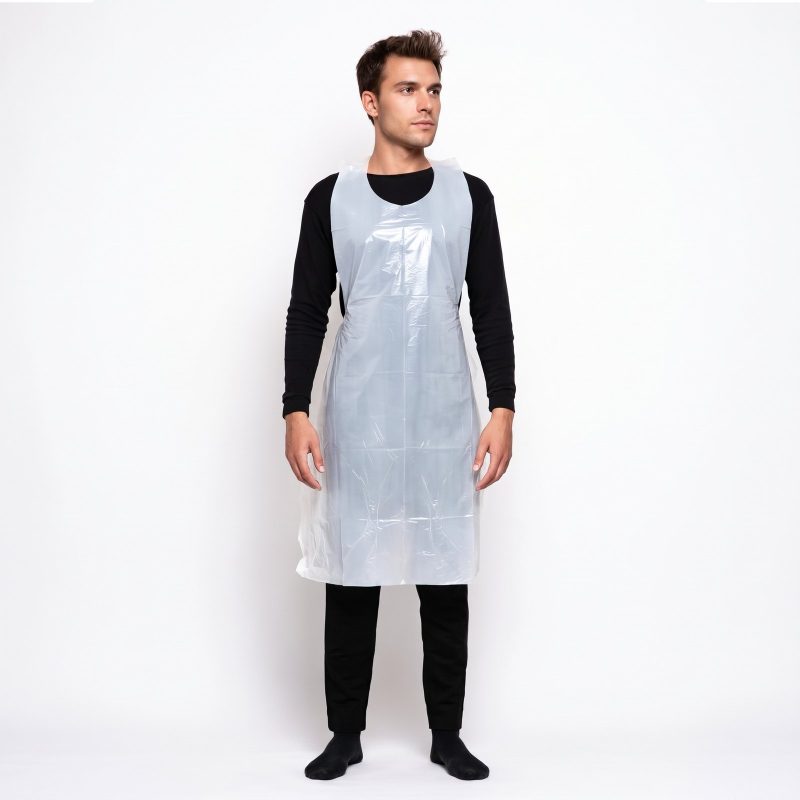
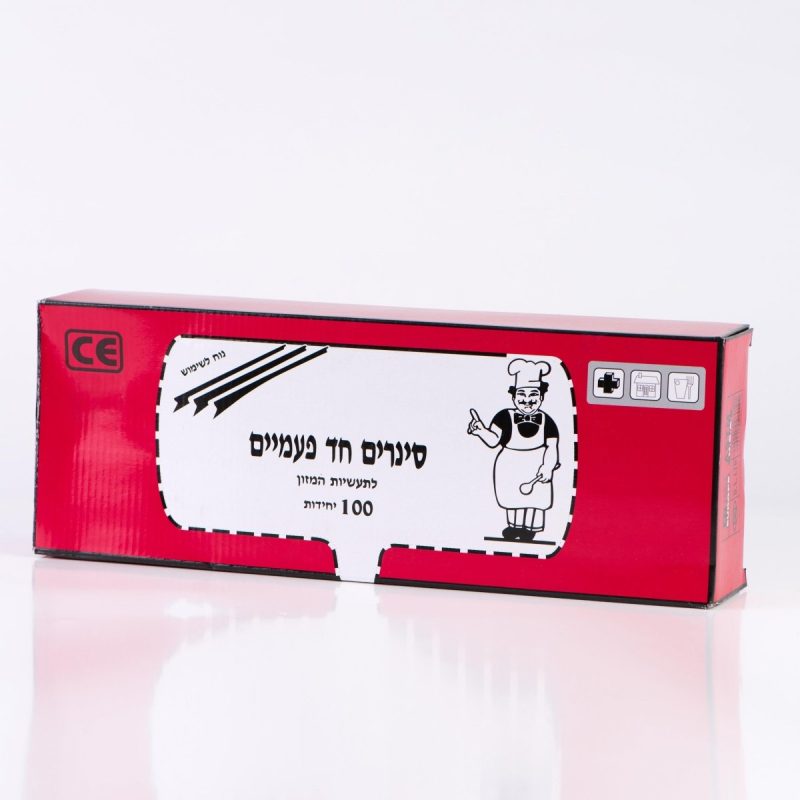
In industrial disposable apparel you’ll find several main families of aprons. Nylon aprons come in 100-unit packs, fit stations with frequent changes, and are offered in various sizes, for example Disposable Apron 110×70. Dispenser aprons allow orderly pull-out, and there’s also a thicker version for wet-load areas or rougher work, such as a thick dispenser apron.
When work requires frequent rinsing of the apron during the shift or continuous contact with liquids, consider P.V.C or polyurethane. P.V.C aprons typically come in small packs of 5 units in 120×75 cm, in white or yellow. Polyurethane aprons are available as a single unit in 120×90 cm in white or blue. There are also aprons with integrated sleeves suitable for tasks with liquid spray.
Alongside the aprons, most lines consolidate related protection items such as sleeve covers, caps, and coats under the same purchase to maintain operational uniformity across departments. The Apparel & Protection category groups the relevant models for one orderly order.
| Item | Material | Size | Color | Qty per pack | Feature |
|---|---|---|---|---|---|
| Disposable apron · SKU 100 | Nylon | 110×70 cm | White | 100 units | None |
| Long disposable apron · SKU 104 | Nylon | 135×70 cm | White | 100 units | Long |
| Disposable dispenser apron · SKU 101 | Nylon | 120×70 cm | White | 100 units | Dispenser |
| Thick disposable dispenser apron · SKU 103 | Nylon | 120×70 cm | White | 100 units | Thick, dispenser |
| White P.V.C apron · SKU 116 | P.V.C | 120×75 cm | White | 5 units | — |
| Yellow P.V.C apron · SKU 115 | P.V.C | 120×75 cm | Yellow | 5 units | — |
| White polyurethane apron · SKU 118 | Polyurethane | 120×90 cm | White | Single unit | — |
| Blue polyurethane apron · SKU 117 | Polyurethane | 120×90 cm | Blue | Single unit | — |
| Envelope-style apron with long sleeves, blue · SKU 105 | Nylon | One Size | Blue | 10 units | With sleeves |
How do you assess quality and robustness for the production floor?
Order samples, test resistance to wet and dry tearing, and check tying, wearing comfort, and pull-out from a workstation. Compare sizes, colors, and packaging type by department and process.
Quality is proven on-site: request samples of every relevant model and test opening and pull-out, tying around the body, and changeover speed between workers. Intentionally try to tear by hand in dry and wet conditions, and compare whether there’s a meaningful difference between regular nylon and “thick” nylon at liquid-intensive stations.
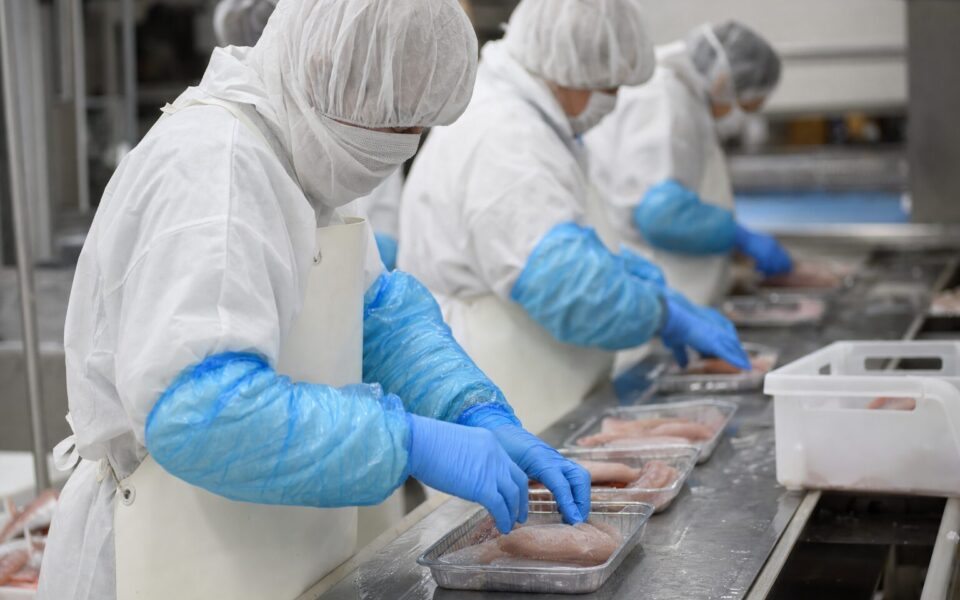
Measure physical fit for workers: 70 cm width suits most packing lines and delis, and 135 cm length is better for meat lines where the station is low and the apron needs to cover down to the knee. In areas with frequent apron rinsing during a shift, test P.V.C or polyurethane models for comfort, weight, and unit cost.
Dispenser packaging is significant at shared stations: check whether mounting on a wall or post will reduce double openings and help maintain sanitation. In stations with high worker traffic, enforcing a color code (white for fresh meat, blue for cleaning or the fish department, per your procedures) makes supervision and team communication easier.
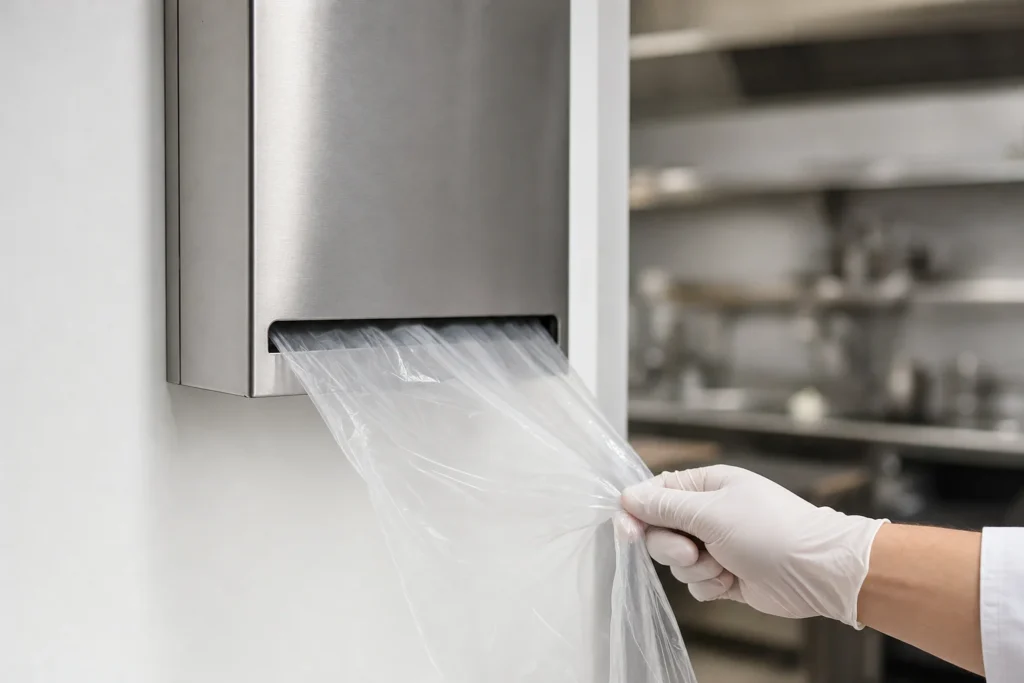 Image for illustration only · Generated by AI
How do you calculate accurate monthly consumption by shifts?
Multiply employees per shift by number of shifts and production days, then multiply by aprons per employee per shift. Convert the result into packs and cartons per the packaging quantities.
The first step is to set a replacement policy for each department: how many aprons per employee per shift. Then calculate using the formula: employees x shifts per day x production days per month x aprons per employee per shift.
Example for illustration only: a team of 25 employees on two shifts, 20 production days per month, and a policy of one apron per employee per shift. Monthly consumption is 25 x 2 x 20 x 1 = 1,000 aprons. If you choose nylon aprons in 100-unit packs, you’ll need 1,000 / 100 = 10 packs.
Another example: a department with 30 employees, three shifts, 22 production days, and one apron per employee per shift. Consumption is 30 x 3 x 22 x 1 = 1,980 aprons. If packed in 100-unit packs, that’s 1,980 / 100 = 19.8, i.e., round up to 20 packs.
In another department that chooses P.V.C aprons (5 units per pack) and sets 120 aprons per month, you need 120 / 5 = 24 packs. If different models are used by department, calculate for each department separately and sum only at the end for the total order.
How many units per carton, and how much to store?
You get the units-per-carton figure from the supplier, and it directly affects storage planning, carton-opening frequency, and reducing overages. Build an order size that aligns consumption cadence with carton contents.
Pack quantity per unit is known from the model, but the number of packs per carton varies by supplier. Request the “units per carton” for each model. This figure determines how often you’ll open a carton during the month and how much space is needed in the warehouse.
Example: if you ordered 20 packs of nylon aprons and each carton contains 10 packs, you’ll need 20 / 10 = 2 cartons. If daily consumption is half a pack, opening one carton will cover 20 days. Adjust quantity to reduce double openings under load and prevent month-end overages.
Consider unifying codes across departments to reach convenient multiples of “packs per carton.” When that isn’t possible, define a small safety stock of one extra carton for each model with high consumption variability.
How to compare suppliers for wholesale disposable aprons?
Measure unit price alongside supply continuity, range of complementary models, and operational support. Request full specs, samples, and differentiation by material, size, and packaging to prevent mismatches.
Here’s how to request a structured quote for fair supplier comparison: list for each model the SKU, material, size, color, quantity per pack, quantity per carton, and a samples request. Calculate unit price (pack price divided by number of units per pack) and compare alternatives by cost–benefit across departments.
Check the ability to consolidate a broad basket of industrial disposable apparel with one supplier—for example aprons, sleeve covers, caps, and coats—to simplify logistics and recurring orders. It’s important to examine availability of parallel models in different lengths or dispenser packaging in the same colors for standardization across lines.
Dogans Ltd., owner of the TITANIC brand, has been active for over 30 years and imports and distributes a range of disposable apparel and protection to businesses. There are no prices on the website, and the quote is built by model, size, and quantity per request. For relevant items you can review the SKUs.
When you receive proposals, factor in logistics: units per carton, the option for recurring orders, and support for consolidated shipping across sites. It’s recommended to back the final decision with a short field trial using the leading models in each department before full rollout.
Operations on the floor: dispensers, colors, and departmental split
Place dispensers at high-load stations, set a color code by department, and manage purchasing by unified SKUs across all sites. Define opening, counting, and tracking procedures to align purchasing with the floor.
Dispensers are especially suitable for production lines with high employee traffic. They support orderly pull-out and keep the station tidy. Choose between a regular dispenser model and a “thick” model based on load. At stations with liquid spray and continuous contact, an envelope-style apron with sleeves or polyurethane may be more suitable.
Color-coding helps supervision and coordination between departments: white for processing and packing, blue for cleaning or another dedicated department, per site procedures. Use the same method for sleeve covers and caps as well—for example, white or blue nylon sleeve covers and white or blue non-woven caps per line.
Alignment across sites: if you operate several plants or branches, define an organizational standard in advance for apron and glove models and sizes to unify orders and inventory. Centralized purchasing by the same SKUs simplifies inventory counts and enables consistent tracking of consumption and waste levels.
Short checklist before choosing a supplier
- Set a replacement policy per department: how many aprons per employee per shift.
- Choose material and construction by process: nylon, dispenser or thick model, or P.V.C or polyurethane.
- Record the required size (width and length) and color code for each department.
- Calculate monthly consumption by employees x shifts x production days x aprons per employee.
- Ask the supplier: quantity per pack and number of packs per carton for each model.
- Calculate unit price and compare cost–benefit across departments.
- Check sample availability and run a short field trial before finalizing the purchasing basket.
- Plan logistics: dispenser placement, safety stock levels, and standardized SKUs across sites.
FAQs
What’s better for a butcher shop or wet meat department—nylon, P.V.C, or polyurethane?
The choice depends on wet load and change frequency. If swapping several times per shift, regular or “thick” nylon enables a fast work pace. If the apron needs to stay on the worker for a long time and withstand repeated rinsing, test P.V.C or polyurethane and weigh unit cost against working hours.
Does dispenser packaging really make a difference on the floor?
With dispenser models it’s easier to pull a single apron at busy stations, which reduces double openings and keeps order. Where several workers use the same equipment point, a dispenser helps dispense a measured quantity and avoid mixing colors or sizes across departments.
How do you set an organizational standard for sizes and colors?
Start by mapping needs per department, then consolidate to a minimum set of models. For example, size 110×70 for packing departments and 135×70 for meat lines, with a fixed color code between departments. A uniform standard simplifies purchasing, maintenance, and inventory counts, and eases training for new employees.
How do you budget when there are no prices on the website?
Request structured quotes for each model including quantity per pack and per carton, and calculate unit price. Compare alternatives by your consumption scenarios: high-turnover stations vs. stations with prolonged use. After on-site validation, you can set a recurring order aligned to consumption cadence.
To finalize an orderly purchasing basket for aprons, coats, sleeve covers, and caps in volume, send a brief spec and order volumes. The sales team will get back to you with a structured proposal via the request a quote form.