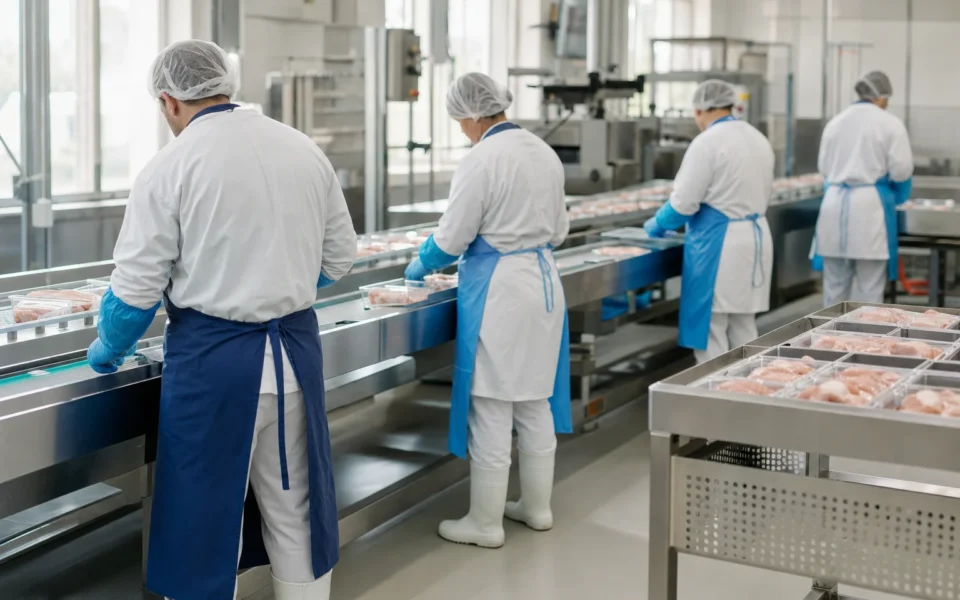
PVC apron for butcheries, polyurethane or nylon – what’s right?
PVC apron for butcheries or polyurethane and nylon? A practical guide comparing models, sizes, and packs for butcheries and delis, to choose correctly and plan bulk ordering.
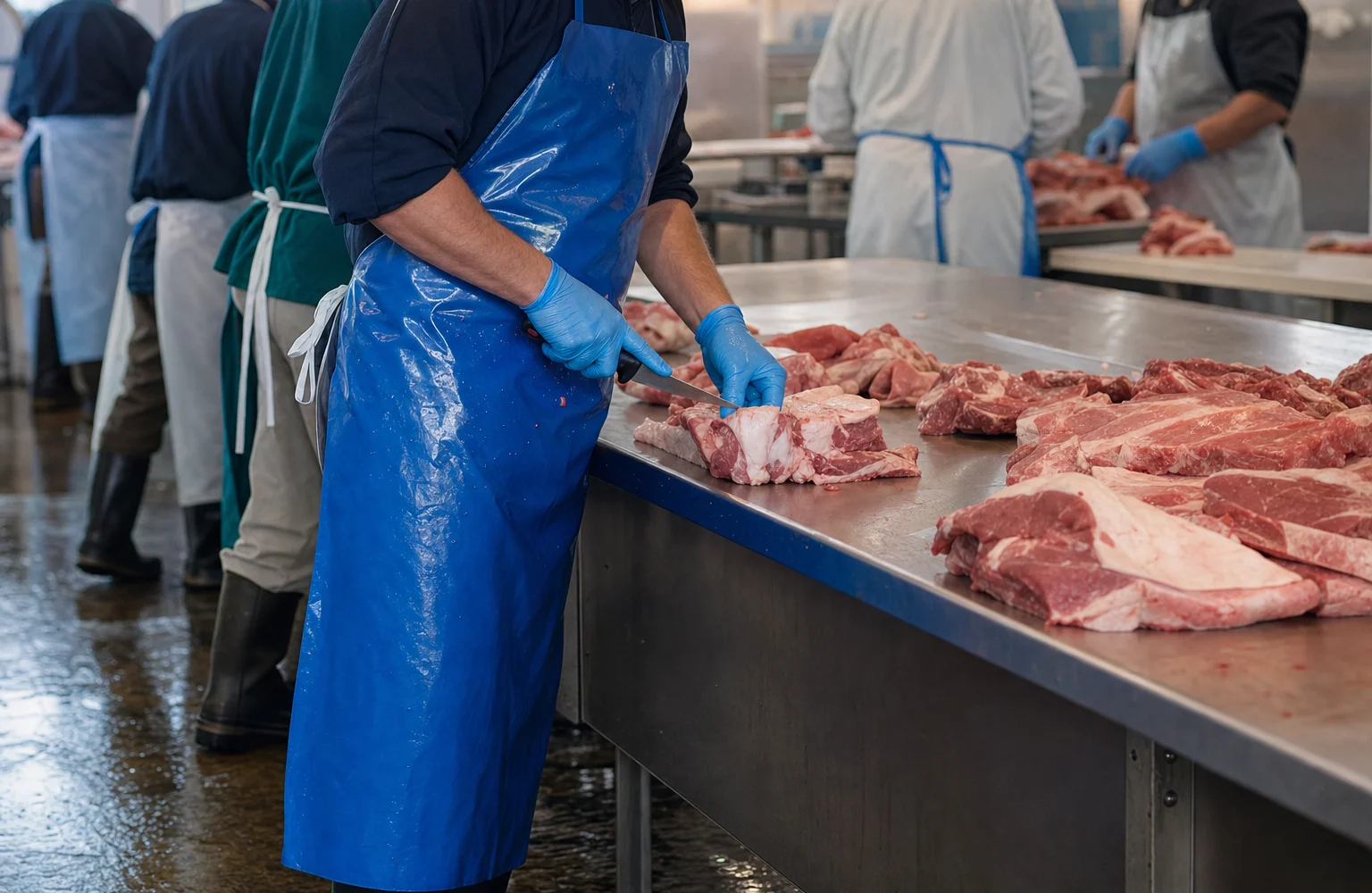 Image for illustration only · Created by AI
In brief
Choosing an apron for a butchery impacts comfortable work and efficient inventory management. A PVC apron for butcheries is supplied in size 120×75 cm and in packs of 5 units; a polyurethane apron is supplied in size 120×90 cm and as a single unit; disposable nylon aprons are offered in various sizes and in packs of 100 units (and in the long-sleeve model – 10 units). What suits you is determined by the workstation type, replacement frequency, and your marking and coverage preferences.
- PVC: size 120×75 cm, pack of 5 units, white or yellow – convenient for allocation by role.
- Polyurethane: size 120×90 cm, single unit, white or blue – suitable for personal assignment.
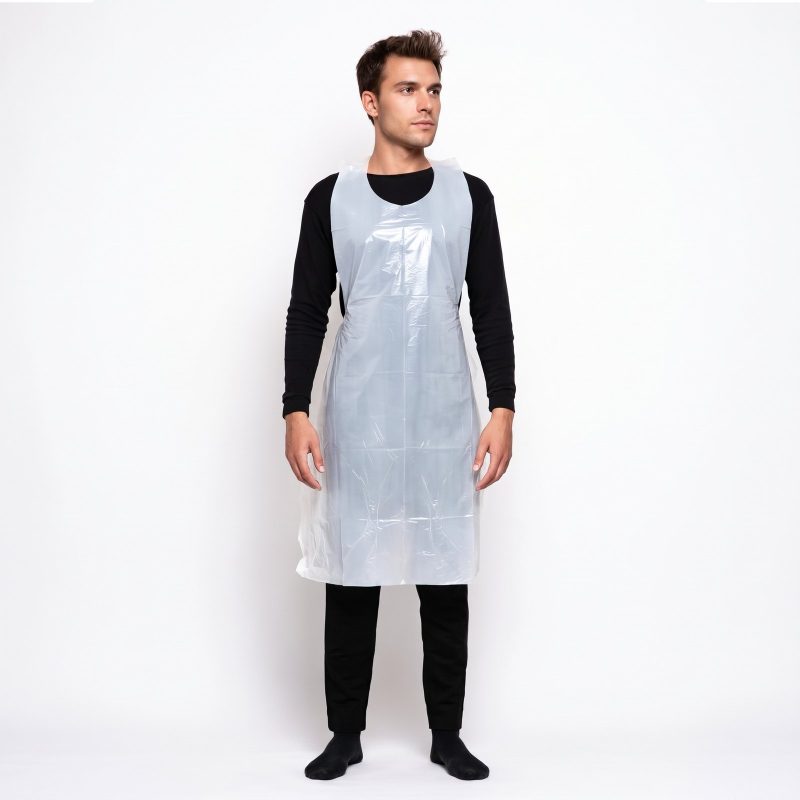
- Nylon: packs of 100 units in sizes 110×70, 120×70, 135×70; and there is a long-sleeve model (10 units).
- Plan ordering by number of employees, number of shifts, and the actual pack size.
- Align with your quality procedures, the manufacturer’s instructions, and applicable regulations before deciding.
What really determines the choice of apron for a butchery?
Define the work environment, replacement frequency, and required coverage – and from there choose between PVC, polyurethane, or nylon. Pack size and color-coding options affect day-to-day management no less than the material itself.
In a butchery or deli, workstations differ: breakdown and processing, slicing and serving, cleaning and washing, picking and prep. Each station requires different coverage and different replacement routines. Therefore, first assess the work volume, staff movement between stations, and the replacement frequency you want to implement.
Beyond apron material, operational variables such as pack size, exact dimensions, and available colors will determine whether you run personal assignment, department-based color coding, or centrally accessible stock for quick swaps. From there, choose the material and model that work with you rather than against you.
Dogans Ltd., brand TITANIC, has imported and distributed disposable apparel and protection for businesses for over 30 years – as part of solutions for customers in meat and deli operations.
In any case, align with your quality and food-safety procedures, follow the manufacturer’s instructions, and check the regulations that apply to you.
When is a PVC apron for butcheries the right choice?
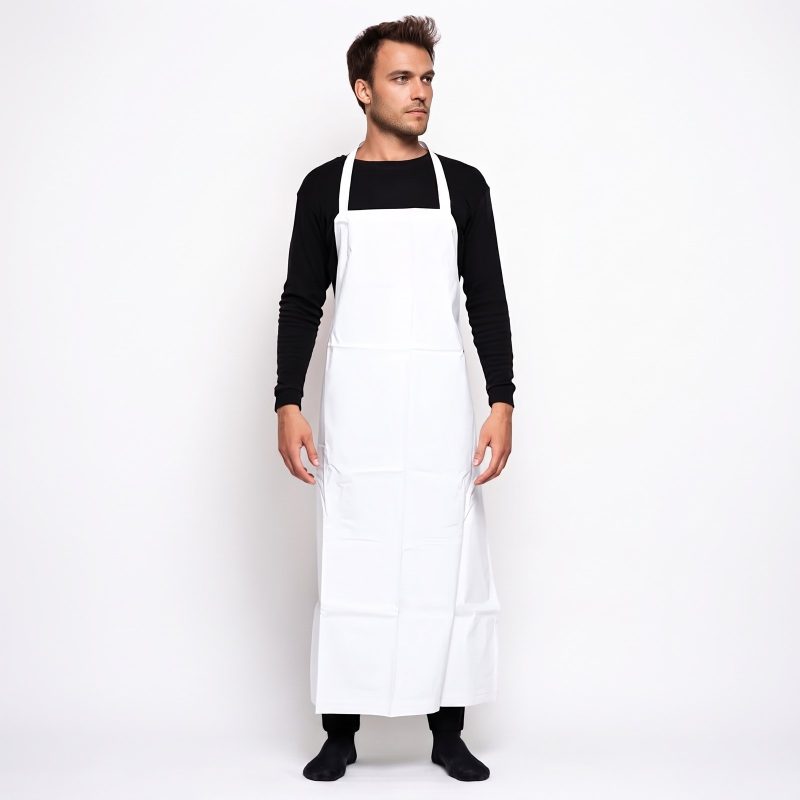
When a standard size of 120×75 cm, packs of 5 units, and white or yellow colors are convenient – a PVC apron offers a simple solution for managing by teams and roles. You can assign by department color or by role.
The PVC models in the catalog are offered in size 120×75 cm and in packs of 5 units, in white or yellow. This is convenient when managing inventory by small teams or when you want to differentiate between processes at a station by color.
Those who work with assignment lists can attach a fixed-color apron to each employee or set a color per station; the small pack helps release stock in stages and control open quantities.
For an example of a white model see P.V.C white apron. There is also a yellow model in the same pack for those who prefer color differentiation on the floor.
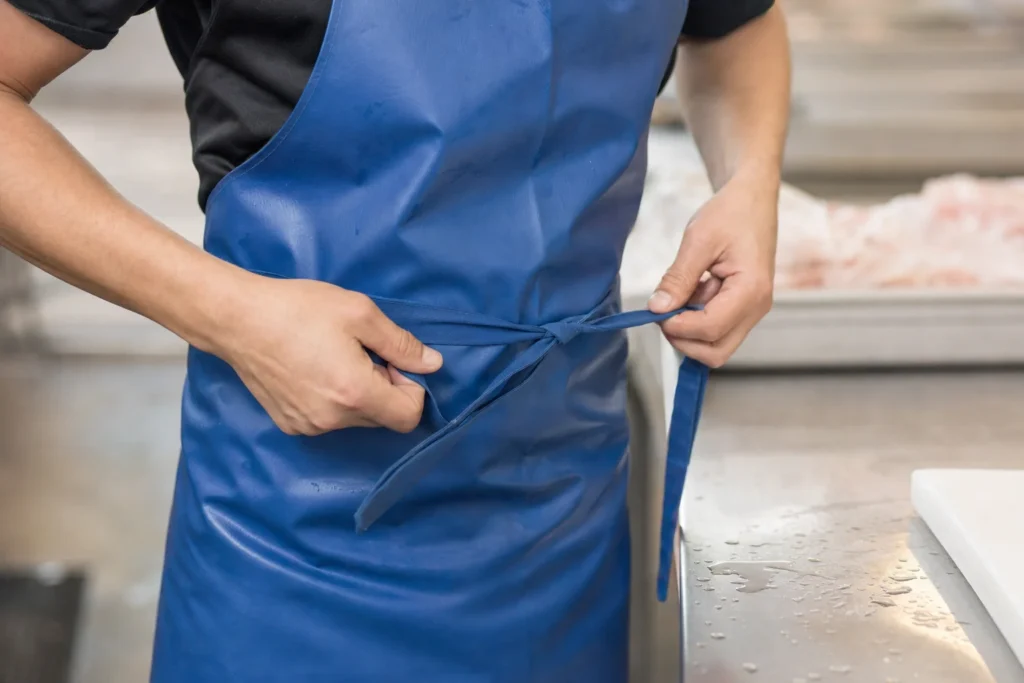 Image for illustration only · Created by AI
When should you choose a polyurethane apron?
When slightly wider coverage in size 120×90 cm and individual assignment by unit is required – a polyurethane apron is supplied as a single unit in white or blue. This simplifies control for permanent employees at defined stations.
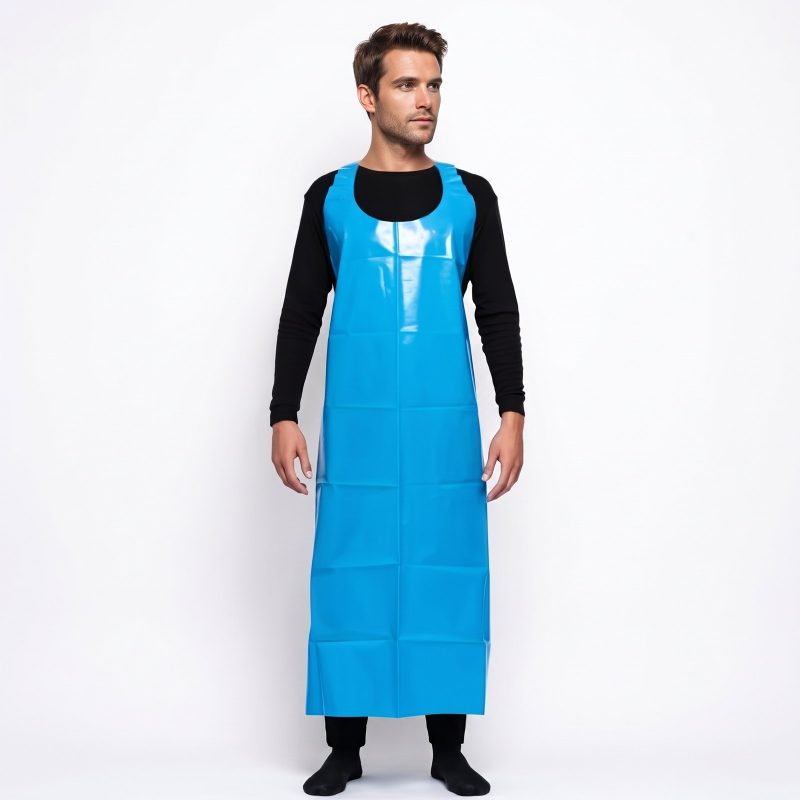
The polyurethane models in the catalog come in size 120×90 cm and in a single-unit pack, in white or blue. This format enables personal assignment and accurate unit counting on site.
The size difference versus PVC (120×75 cm) can matter at stations where a slightly longer and wider coverage is preferred. Blue aids those who separate teams or task types by color.
For an example of a blue model see blue polyurethane apron. A white model exists in the same size and as a single unit.
And when does it make sense to work with a disposable nylon apron?
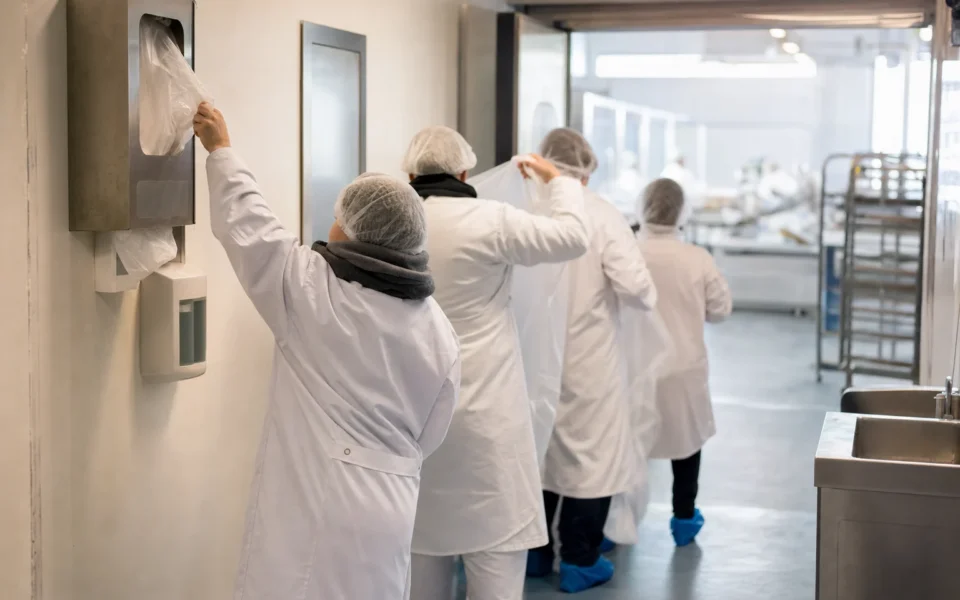
When replacement policy is high throughout the day or when you prefer large packs – nylon aprons are supplied in 100-unit packs for various sizes, and there is also a long-sleeve model in a 10-unit pack. This provides quick accessibility and frequent replacement.
In the nylon category you will find several sizes: 110×70 cm, 120×70 cm, and 135×70 cm. Those looking for accessibility at a workstation can choose models for use in a dispenser in size 120×70 cm, as well as a “thick” model in the same size for a different feel. There is also an envelope apron with long sleeve in blue (one size) in a 10-unit pack.
The 100-unit packs suit points with high turnover, onboarding of temporary staff, or service stations open for many hours. Those who run color lines between departments will find mainly white here, and in the long-sleeve model – blue.
For a look at a classic 110×70 cm model see disposable nylon apron. Also available: long disposable apron 135×70 cm, disposable dispenser apron 120×70 cm, thick disposable dispenser apron in the same size, and an envelope apron with long sleeve in blue.
Which models and sizes exist, and what are the practical differences?
In the catalog you will find PVC, polyurethane, and nylon models in different sizes and packs, so you can match them to the station and replacement frequency. The table briefly sums up the essentials.
In the Apparel and Protection category you’ll find the apron models relevant to butcheries and delis. The table below is based on catalog data, to see at a glance the size, color, and pack quantity in each family.
| Apron type | Example models | Typical size | Available colors | Quantity per pack | Example SKU |
|---|---|---|---|---|---|
| PVC | P.V.C white apron; P.V.C yellow apron | 120×75 cm | White or yellow | 5 units | 116, 115 |
| Polyurethane | White polyurethane apron; blue polyurethane apron | 120×90 cm | White or blue | Single unit | 118, 117 |
| Nylon | Disposable apron; long disposable apron; disposable dispenser apron; thick disposable dispenser apron; envelope apron with long sleeve | 110×70, 120×70, or 135×70; one size for long sleeve | White; blue in the long-sleeve model | 100 units; 10 units in the long-sleeve model | 100, 104, 101, 103, 105 |
How much to order per shift and per month?
Calculate by the number of employees, the number of shifts per month, and the quantity per unit in the pack. Below are two calculation examples for illustration only, based on the catalog’s pack data.
To avoid shortages or overstock, start with the number of active employees per shift and multiply by the number of shifts and working days in the period. Divide the result by the quantity per unit in the pack and round up to the next full pack.
Example 1 – disposable nylon (for illustration only): assume 12 employees per shift, 3 shifts per day, and 30 working days per month. If in each shift each employee uses one apron, monthly consumption is 12×3×30=1,080 units. In packs of 100 units you will need 1,080/100=10.8, i.e., 11 packs per month to cover 1,100 units.
Example 2 – personal allocation for single-unit models (for illustration only): assume 15 employees at fixed stations, and each is assigned two apron units (one in use and one spare) according to the manufacturer’s instructions and your cleaning processes. A base of 15×2=30 units is required. If you add 10% safety stock for seasonal peaks, you reach 30×1.1=33 units. For the PVC model in a 5-unit pack, 33/5=6.6 so round up to 7 packs. For the polyurethane model in a single-unit pack – 33 units counted.
The working principle is the same for every model: the pack data from the catalog are the starting point, and simple multiplications show what to order. It’s recommended to record the gap between planning and actual consumption and refine estimates in the next ordering cycle.
What to ask a disposable apparel supplier for bulk orders?
Focused questions on sizes, packs, and colors can help tailor to your operation. This way you can ensure the goods suit actual use and on-site inventory management.
A disposable apparel supplier for bulk orders should provide clear data by model and pack. Prepare in advance the headcount per station, size and color preferences, and replacement frequency for each line. This helps target the quote to your practice and reduces reliance on incomplete estimates.
- What is the exact size in each model relevant to your stations (for example 120×75 cm versus 120×90 cm or 135×70 cm).
- What quantity is in each pack and how it is presented and accessible at the station (100 units, 5 units, or single unit).
- Which colors are available in each material, and whether you want to define color by role or by area.
- Are there models for use in a dispenser for nylon at stations with frequent replacement, or a long-sleeve model for certain stations.
- Is a solution required for personal assignment to permanent employees, or alternatively high-turnover models for peak seasons.
- How supply will be handled in a mixed order of several models, to ease inventory counting and warehouse receiving.
Pre-order checklist
- Map stations: which stations require 120×75 cm, 120×90 cm, or 135×70 cm coverage.
- Set replacement frequency: by shift and by department, and the impact on the desired pack size.
- Decide on colors: white or yellow for PVC; white or blue for polyurethane; white and, for the long-sleeve station – blue.
- Assign to permanent employees or keep central stock for quick replacement – according to your work structure.
- Select complementary models if needed (for example, long sleeve for nylon models).
- Calculate quantities by number of employees, shifts, and working days, rounding to a whole number of packs.
- Set a measurable, fixed seasonal safety stock percentage.
- Labeling and open-pack policy to reduce open overstock at the station.
- Record monthly consumption to improve order planning in the next cycle.
FAQ
How to decide between 120×75, 120×90, or 135×70?
The size decision is based on desired coverage at the station and employee comfort. 120×75 cm is a common size in PVC models, 120×90 cm in polyurethane models, and in nylon there are also 110×70 cm and 135×70 cm for longer models. If your team varies in height and build, consider combining two sizes at the same station.
Is it worth keeping a nylon “dispenser” model as well?
If there are work points with quick changes and high availability needs, nylon models for use in a dispenser in size 120×70 cm may fit. There is also a “thick” version in the same size for a different feel. Choose according to space constraints at the station and replacement frequency.
Are there aprons with a long sleeve?
Yes. The catalog includes an “envelope apron with long sleeve” in blue, in a 10-unit pack and in one size. This model is suitable when you want to cover the arm as well, depending on the task at the station.
How to manage the ordering process when there are several colors in the same material?
Set a color by role or area, and consolidate the request for units according to this division. In PVC models there are white or yellow, in polyurethane models there are white or blue, and in nylon most models are white and the long-sleeve model – blue. Keep separate counts for each color to maintain the distinction over time.
To move forward with a structured order, define the models and sizes for each station and calculate quantities by shift and by month. For a quote and guidance according to your plant or branches, send a request a quote.