What disposable clothing does a food plant need – a procurement guide
Disposable clothing for a food plant: a practical guide for procurement managers. How to define an assortment by departments, calculate quantities, and compare apron types, head covers, and foot covers.
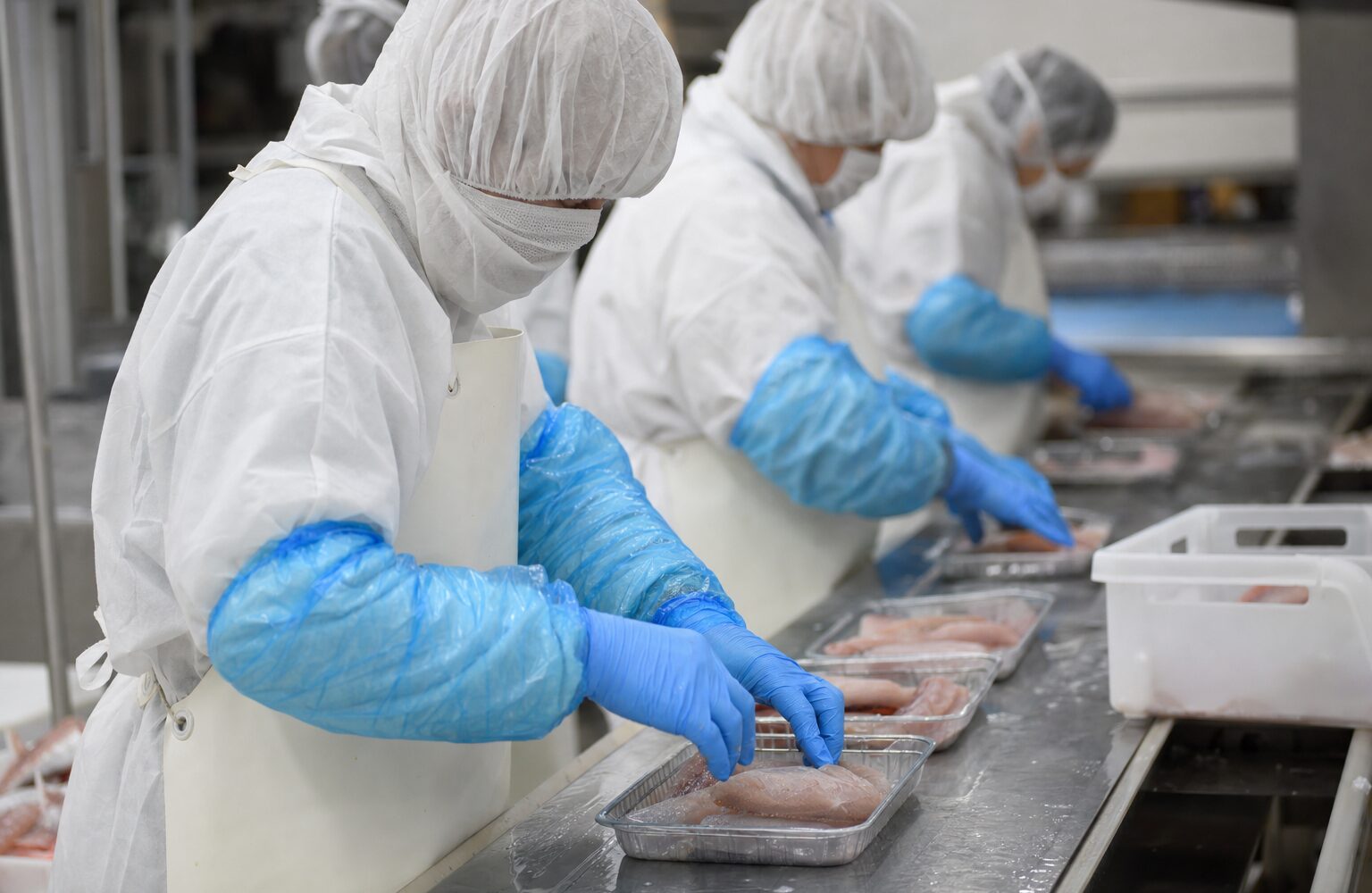 Image for illustration only · Generated by AI
In short
Disposable clothing for a food plant is built as a segmented assortment by areas, roles, and shifts, with a clear separation between head, body, and legs. Good decisions rely on product type, material, pack size, departmental color coding, and ease of distribution on the floor. This guide gives you a simple way to estimate monthly consumption, a comparison table for apron types, and a framework for choosing head covers, coats, and sleeves. That’s how you’ll assemble a consistent spec that can be reviewed and approved with the floor team.
- Start by defining the assortment by departments, roles, and shifts—only then go down to the item level.
- Choose materials and sizes based on the work environment and department preferences, with clear color marking for quick identification.
- Check pack units and quantities per bundle—this affects replenishment frequency and logistics.
- Use a simple monthly consumption calculation based on team size and replacement frequency.
- Combine head covers, aprons, coats, and sleeves to build consistent protection from head to toe.
What counts as “disposable clothing for a food plant,” and why is it a procurement matter?
Disposable clothing for a food plant includes head and face covers, coats or jackets, aprons, sleeves, and shoe/boot covers as needed. For procurement, this is a cross-plant category serving different departments that requires standardization and accessible inventory management.
This category includes items intended for short use and frequent replacement, alongside complementary protective items. Most come in multi-unit packs that make distribution to the floor easier, and sometimes there are color or size differences between areas.
To control consumption and distribution, it’s recommended to define a spec by areas and roles, decide on colors for quick identification, and consolidate shared SKUs across departments wherever possible. This shortens distribution time and reduces issuing errors.
When selecting a supplier, it’s worthwhile to review brands and SKUs in the Clothing & Protection category to build a unified base assortment, and only then add department-specific adjustments.
How do you calculate quantities by departments and shifts?
Calculate by number of users, replacement frequency per item, number of shifts, and working days per month, plus a safety factor. Color-coding or department-based allocation helps maintain inventory control.
The simple way is to build a consumption table for each department: how many employees use each item, how many units per user per shift, how many shifts, and how many working days. Finally, add a small safety factor for exceptions and contractors.
Example for illustration only: a plant with 40 production workers and 10 packing workers per shift, two shifts a day, 22 working days a month. Assume a policy of one unit per shift for each relevant disposable item in the department.
Calculation for lab caps for the Production department: 40 employees × 1 cap per shift × 2 shifts × 22 working days = 1,760 caps per month. White bouffant lab caps come in 1,000-unit packs (SKU 130), so the floor needs 2 full packs (2,000 units) to cover the need, leaving a balance of 240 units.
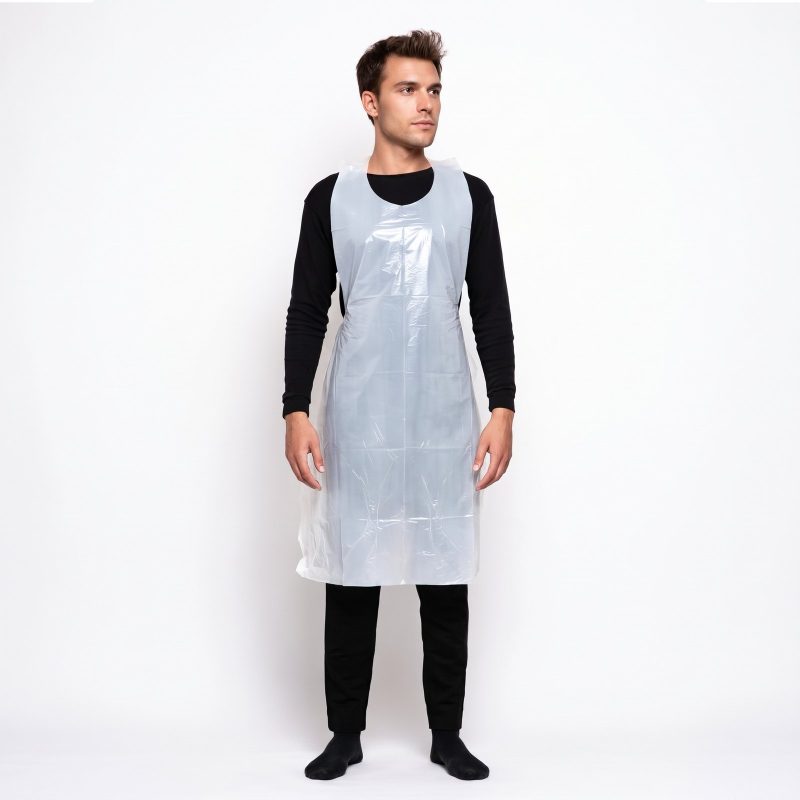
Calculation for nylon aprons for the Packing department: 10 employees × 1 apron per shift × 2 shifts × 22 working days = 440 aprons per month. A pack of disposable apron 110×70 cm includes 100 units (SKU 100), so you should order 5 packs to cover 500 units and leave a balance for distribution.
Calculation for disposable sleeves for the Production department: 40 employees × 1 pair per shift × 2 shifts × 22 working days = 1,760 pairs (3,520 units). Each pack includes 100 units (SKU 121 or 1211), so a monthly order requires 36 packs (3,600 units) to exceed the required threshold.
Beard covers are planned only for the relevant share of employees. Assume 25% of production employees need a cover: 40 × 25% = 10 employees per shift. 10 × 1 × 2 × 22 = 440 units per month. The pack is 1,000 units (SKU 1001), so one pack is sufficient for the month with a balance for the following weeks.
In any case, item selection and quantities must be aligned with your quality and food safety procedures, manufacturer’s instructions, and applicable regulations.
 Image for illustration only · Generated by AI
When to choose a nylon, PVC, or polyurethane apron?
Choose based on the work environment, team preference, size, and packaging. Nylon suits high consumption in 100-unit packs, while PVC or polyurethane come as single units or in small packs and in defined sizes.
The work environment is influenced by humidity, departmental color coding, physical size, and touch preference. Since each material feels different on the body, it’s common to define a lead apron for the main departments and keep a defined alternative in another size or color for edge cases.
Pay attention to size: in the catalog you’ll find various sizes, for example 110×70 cm, 120×70 cm, or 120×90 cm. Matching length and width to taller teams or seated work reduces waste and discomfort.
Below is a concise comparison table based on catalog data.
| Item | Material | Size | Color | Qty per pack | SKU |
|---|---|---|---|---|---|
| Disposable apron | Nylon | 110×70 cm | White | 100 units | 100 |
| Long disposable apron | Nylon | 135×70 cm | White | 100 units | 104 |
| White P.V.C apron | P.V.C | 120×75 cm | White | 5 units | 116 |
| Blue polyurethane apron | Polyurethane | 120×90 cm | Blue | Single unit | 117 |
Which head and face covers fit different production areas?
Combine bouffant or chef/lab caps by area, and beard covers or head-face covers as needed. The choice depends on work procedures, appearance, department colors, and large packs for easy distribution.
For general departments, nonwoven lab caps are common, in bouffant or folded versions. There are white or blue colors for quick area differentiation: bouffant lab cap white (SKU 130, 1,000 units) or blue (SKU 203, 1,000 units), and folded lab cap white (SKU 194, 1,000 units) or blue (SKU 135, 1,000 units).
For kitchens, serving counters, and baking areas, paper caps also fit: disposable cook cap (SKU 131, 100 units) or numbered chef caps in paper or nonwoven in packs of 10 units for tighter control of small-department inventory.
For face coverage, nonwoven surgical masks in one size (SKU 201, 50 units) join the assortment per internal procedures. For bearded staff, add a white beard cover (SKU 1001, 1,000 units) supplied in a convenient industrial pack.
For work requiring broader head coverage, you can choose a ninja-style head-face cover (SKU 1006, 100 units) for uniform appearance and to reduce the item mix in certain departments.
Coats, jackets, and sleeves: what’s the difference and how to stock?
Nonwoven coats and jackets provide full or partial body coverage depending on sleeve type, while nylon sleeves give targeted reinforcement for the arms. Planning is set by seasons, job types, and team preference.
Upper body garments in nonwoven fit situations where you want a uniform look with coverage in designated areas. A disposable long-sleeve coat, nonwoven white, comes in one size and a 10-unit pack (SKU 126). A disposable jacket is available with long sleeves (SKU 1912, 10 units) or short sleeves (SKU 124, 10 units)—the choice depends on workspace temperature and mobility.
When there’s a focused contact profile on hands, you can add disposable nylon sleeves in white (SKU 1211, 100 units) or blue (SKU 121, 100 units) to increase uniformity and departmental identification. Color helps warehouse staff issue the right product to each line.
For floor distribution, 10-unit packs suit measured allocation to small teams, while 100- or 1,000-unit packs fit dedicated distribution points or centralized distribution along production lines. This builds a balance between control and simple logistics.
Foot covers, boots, and working with wet processes
Disposable foot covers are added as needed in certain work environments, and rubber boots complement where required. Define by area, season, and cleaning profile of the lines.
Transparent nylon boot covers (SKU 151, 100 units) fit spot additions where an accessible coverage layer is needed. The advantage is a 100-unit pack that suits a dispenser at the area entrance.
Where water is used, you can define dedicated footwear by team size. Rubber boots are available in white (Elad model, SKU 185, pair) or black (SKU 184, pair) in a range of sizes. This reduces confusion when issuing by defined size ranges.
For outdoor activity or rainy days, there’s a PVC rain suit in yellow or green (SKU 188, set of pants and shirt) and industrial pants in polyurethane in yellow or fluorescent green (SKU 189, single unit). The combination is set by plant policy and workload.
How to work effectively with a disposable clothing supplier at scale?
Choose a supplier with an available range in clear SKUs, industrial packaging, department colors, and the option to advise on building the assortment. Efficient procurement relies on product uniformity and ongoing communication between warehouse, quality, and procurement.
Start with a basic spec shared by all departments, and define a few, well-justified exceptions. Prefer items in packs suitable for dispensers in satellite stores, for example 100-unit aprons or 1,000-unit lab caps for longer distribution cycles.
Align on uniform departmental coloring (white or blue, per your choice) to ease visual control on the floor. Also add complementary items like work gloves in the same order to reduce logistics splits.
Dogans Ltd., owner of the TITANIC brand, imports and markets to businesses a range of disposable clothing and protection alongside disposable packaging products. The company has operated as a family business since 1991 and serves food plants, butcheries, catering, and chains—so you can build an assortment suited to industrial distribution and line consumption.
For a quick introduction to the items in the assortment, you can refer warehouse teams to the product pages, for example Disposable apron 110×70, and review the pack units and sizes together before placing a repeat order.
Short checklist for selecting disposable clothing for a food plant
- Map departments, roles, and shifts; define who uses which item and how often.
- Set uniform department colors (white or blue, as needed) to reduce issuing errors.
- Select materials and sizes by work environment and mobility: nonwoven, nylon, PVC, or polyurethane.
- Check pack units: 10, 50, 100, or 1,000 units—and match to a dispenser or manual distribution.
- Calculate monthly consumption and cross-check with opening inventory and a safety factor for monthly orders.
- Align procurement, warehouse, and quality on replacement frequency, entry points, and distribution procedures.
- Define a uniform basic mix for all departments with well-defined exceptions as needed.
- Shelf and distribution-point labeling by SKU and color for quick identification and reduced waste.
- Periodic review of waste and returns from the floor and adjust quantities accordingly.
Frequently asked questions
How to choose between a bouffant lab cap and a folded cap?
The choice is set by appearance and department preference. Both versions come in 1,000-unit packs in white or blue, which simplifies quantitative distribution and color coding between areas. If there’s inconsistency on the floor, define one model per department to reduce errors.
When should you prefer a longer-size apron?
When there are taller employees or work with surfaces at varying heights, the 135×70 cm size can provide extra coverage. 100-unit packs allow a pilot in one department before wider rollout. Adjust the length also to seated or standing work patterns.
How many beard-cover packs to order for a central warehouse?
The calculation depends on the share of relevant employees and replacement frequency. Since the pack is 1,000 units, start with a monthly usage estimate by the actual number of users and add a small safety factor. Example: if monthly need is 400 units, one pack will cover the month and leave about 600 units for the following months.
How to color-code departments without confusing the warehouse?
Define one color per department and keep it across the full assortment of colorable items. For example, blue sleeves and blue lab caps for one department, and white for another. Post simple signage with physical samples near the shelves and consider separate packaging for each color.
For a structured spec and a tailored quote for disposable clothing at scale, send your team breakdown, replacement frequency, and color preferences. We’ll prepare an assortment based on the details you enter in the request a quote.